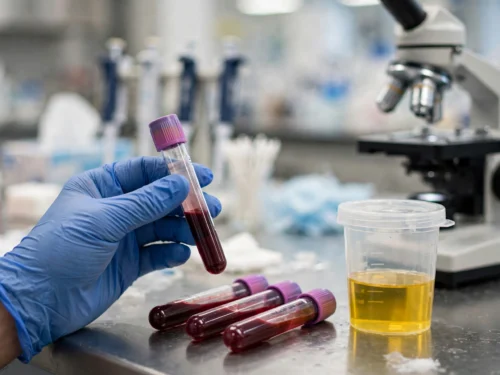
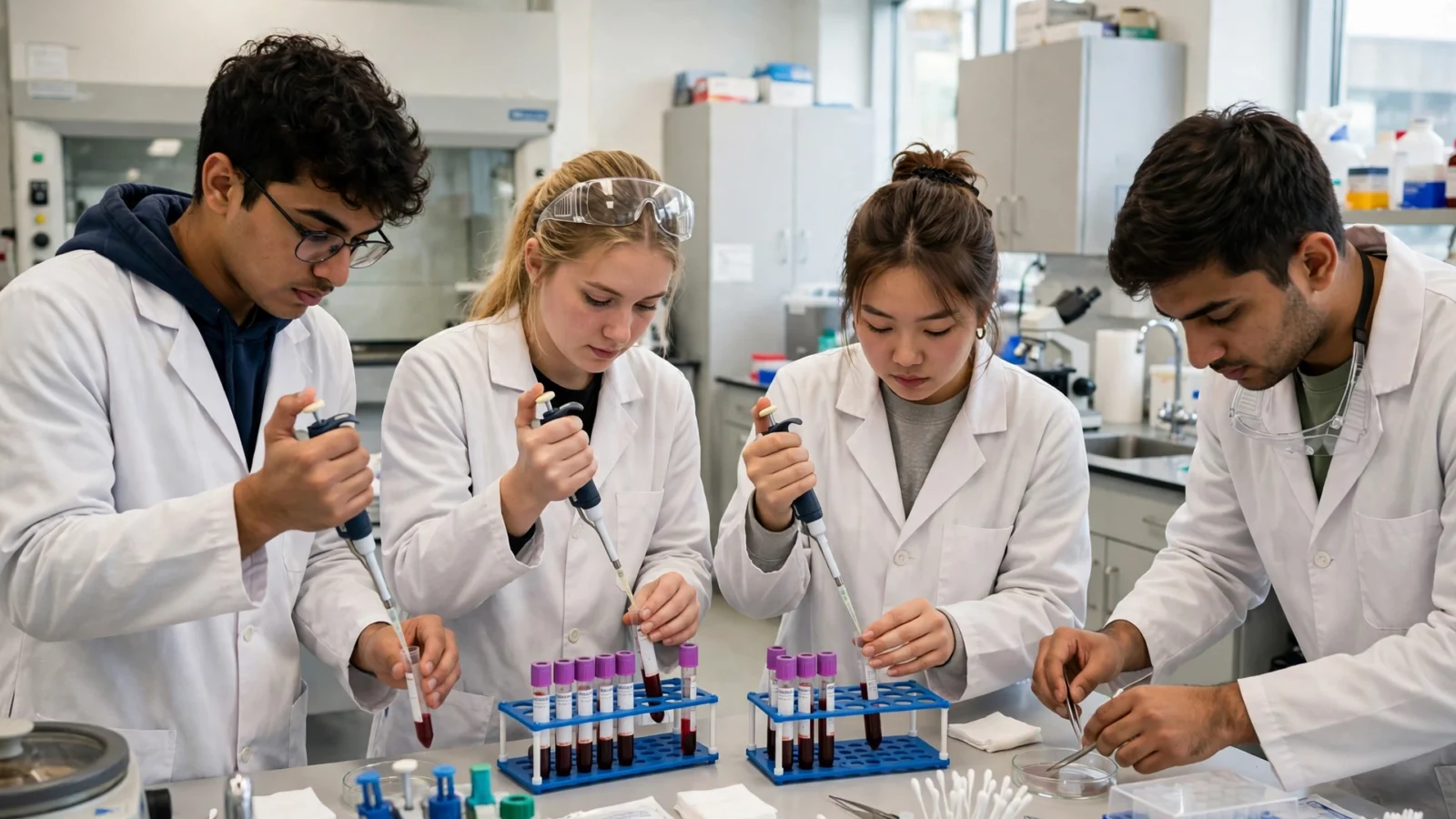
Most patients never meet the person who actually finds out what is wrong with them. The doctor asks for a blood test, a sample goes down to the lab in a labelled tube, and a report comes back with numbers that decide the next step of treatment. Behind that report is a medical laboratory technician — the trained professional who runs the test, checks that the result makes sense, and flags it when it does not. The medical laboratory technician course in Pakistan is how you become that person, and at RIAHS it is one of the flagship programs in the institute’s Category A group.
This guide covers the MLT course honestly: what it is, how long it takes, who can apply, what you will actually learn, and where it can take you afterwards. Every fact about RIAHS here comes from the institute’s own programs and admissions pages, verified today. Where a detail depends on the current admission cycle — fees, dates, merit lists — we say so plainly instead of guessing.
Key Takeaways
- The Medical Laboratory Technician (MLT) course at RIAHS is a 2-year program.
- It is a Category A — New Scheme of Studies program, equal to F.Sc (Medical Technology Group).
- Eligibility: Matric (Science) — Biology, Chemistry, Physics — with a minimum of 45% marks, and age 15–25 years at admission.
- Training covers diagnostic techniques including hematology, microbiology, and clinical chemistry in accredited labs.
- MLTs work in hospital laboratories, diagnostic centres, and clinical labs across Pakistan.
- Fee details are shared on a campus visit or WhatsApp inquiry — no fee figure is published on the admissions page, and none is claimed here.
Table of Contents
- What Is an MLT Course?
- How Long Is the MLT Course?
- Who Can Apply for the MLT Course?
- What Subjects Will You Study?
- MLT vs B.Sc MLT vs D-MLT: What Is the Difference?
- Career Scope of an MLT in Pakistan
- How to Apply at RIAHS
- Frequently Asked Questions
What Is an MLT Course?
A medical laboratory technician is the healthcare worker who tests body samples — blood, urine, and other specimens — and produces the laboratory reports that doctors rely on. When a doctor suspects anaemia, infection, diabetes, or kidney trouble, it is very often a lab report that confirms or rules it out. The technician’s job is not just to operate machines: it is to collect and handle samples correctly, run tests precisely, keep quality checks in order, and recognise when a result looks wrong and needs repeating. A careless lab result can send treatment in the wrong direction, which is why this is skilled, responsible work, not button-pressing.
At the Ravi Institute of Allied Health Sciences (RIAHS) in Shahdara, Lahore, the MLT program sits in Category A — the New Scheme of Studies group, equal to F.Sc (Medical Technology Group). RIAHS is a PMF-affiliated institute, so its programs run under the Punjab Medical Faculty framework. You can compare all the programs on the RIAHS programs page, and the official PMF site is pmfpunjab.edu.pk.
How Long Is the MLT Course?
How many years is the MLT course?
The MLT course at RIAHS is 2 years long. That is the standard length for every Category A program at the institute — Dispenser, Radiography, Operation Theater Technician, and the rest of the group all run for two years. Two years is long enough to move from basic lab safety and sample handling in the early months to real diagnostic work, and it matches the F.Sc-equivalence status of the qualification: this is a full two-year program, not a short certificate.
Exact class schedules and start dates change from one admission cycle to the next. RIAHS announces current dates on its Notice Board, so check there — or ask the admissions team directly — rather than relying on a date you read in an old article, including this one.
Who Can Apply for the MLT Course?
What is the eligibility for the MLT course in Pakistan?
To apply for the MLT course at RIAHS, you need Matric (Science) — Biology, Chemistry, and Physics — with a minimum of 45% marks in your board examination, and you must be aged 15–25 years at the time of admission. Selection is on a merit basis, with higher Matric marks prioritised and seats limited. These are the Category A requirements, and they apply to MLT exactly as they apply to the other Category A programs.
| Requirement | Detail (RIAHS) |
|---|---|
| Qualification | Matric (Science) — Biology, Chemistry, Physics |
| Minimum marks | 45% in board examination |
| Age | 15–25 years at time of admission |
| Duration | 2 years |
| Category | Category A — New Scheme, equal to F.Sc (Medical Technology Group) |
| Selection | Merit basis; seats limited |
What documents do I need to apply?
RIAHS asks for your CNIC or B-Form (original plus a copy), your Matric certificate (original plus two copies), and four recent passport-size photographs. Keep originals ready for verification when you visit the campus or submit your application — it saves a second trip.
Can I apply for MLT after Matric with arts subjects?
No — not for this program. Category A programs, including MLT, require Matric (Science). Students from arts or general streams can look at the institute’s Category C programs instead, which accept Matric from any group: LHV, CMW, CNA, and the B-Category Pharmacy Technician program.
Can I apply for MLT after 10th class?
Yes, in the sense that Matric is the 10th class in Pakistan — Matric (Science) with at least 45% marks is exactly the entry qualification. Students often search for “MLT course after 10th” and “MLT course after 12th”: at RIAHS, the route opens right after Matric, so you do not need to complete F.Sc first. If you have already done F.Sc, you still meet the requirement — Matric (Science) remains the minimum.
What Subjects Will You Study?
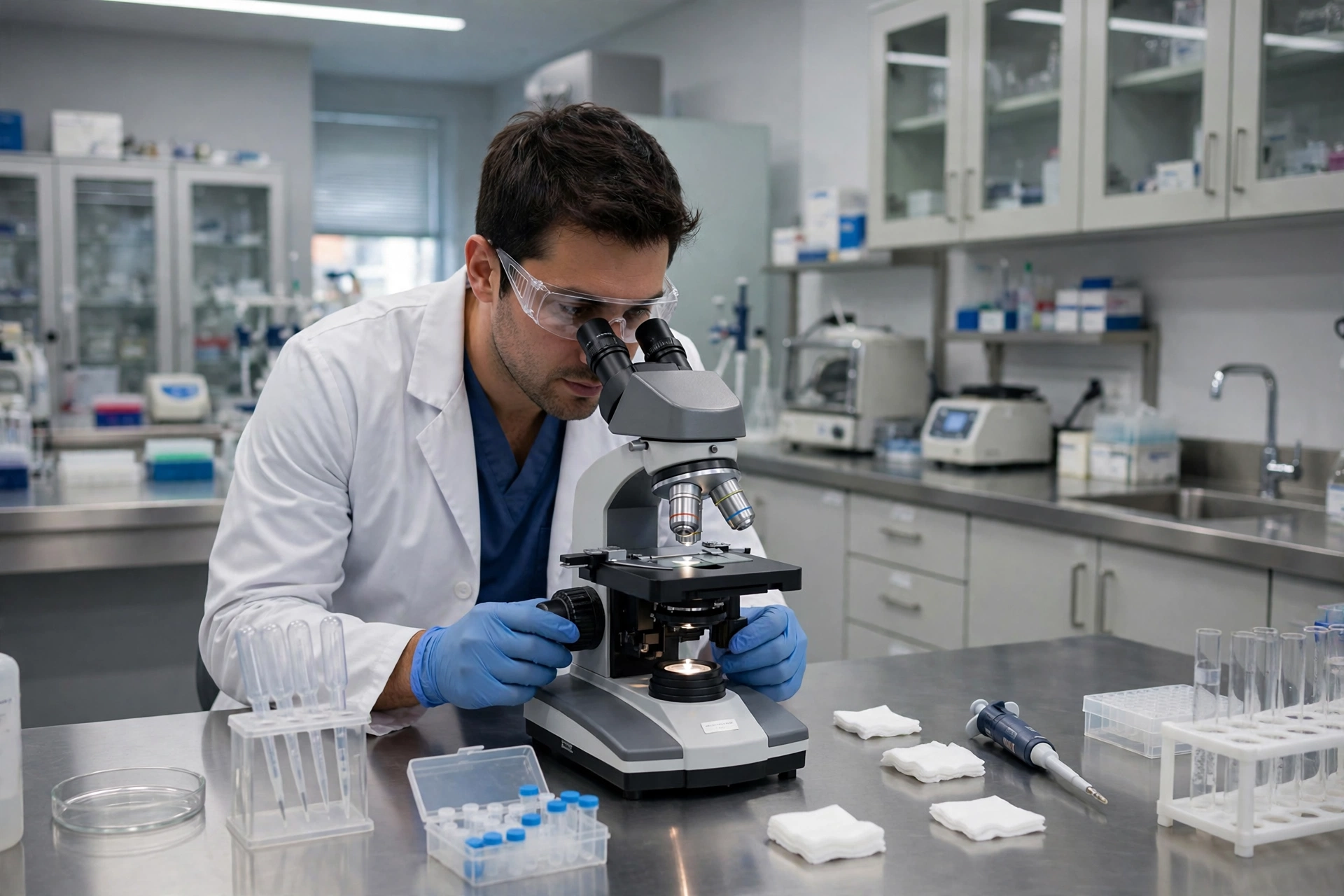
The MLT program is built around diagnostic laboratory work. RIAHS describes the program’s focus as mastering diagnostic techniques including hematology, microbiology, and clinical chemistry in accredited labs. In practice, your training will revolve around these areas:
- Hematology — blood testing: blood counts, blood grouping, and the laboratory side of anaemia and blood disorders.
- Microbiology — identifying the bacteria, fungi, and other microbes that cause infection, and testing which treatments they respond to.
- Clinical chemistry — measuring the chemical markers in blood and other samples, such as sugar, kidney and liver indicators, and electrolytes.
- Sample collection and handling — taking, labelling, storing, and transporting samples without contamination or mix-ups.
- Lab safety and quality control — safe handling of infectious material, correct use of equipment, and the daily checks that keep results trustworthy.
- Equipment and reporting — microscopes, analysers, and centrifuges, plus accurate, legible reporting that a doctor can act on.
A note of honesty: RIAHS does not publish a subject-by-subject syllabus for MLT on its programs page, so this guide describes the program’s training areas rather than inventing a semester-wise subject list. Ask the institute for the current syllabus when you apply — syllabuses are set within the PMF framework and can be updated.
MLT vs B.Sc MLT vs D-MLT: What Is the Difference?
Search results for MLT courses are full of similar-looking abbreviations, so here is the short version. The RIAHS MLT program is a two-year, PMF-affiliated diploma-level program under Category A, equal to F.Sc (Medical Technology Group) — it opens after Matric (Science). A B.Sc MLT is a university degree program, longer and at degree level, usually entered after F.Sc. A D-MLT (Diploma in Medical Laboratory Technology) is a diploma label used by various institutes and boards, and its exact standing depends on the awarding body. If you are comparing options, do not judge by the letters alone: check the awarding body, the duration, the entry requirement, and whether the program is PMF-affiliated. For a Matric (Science) student in Punjab wanting a recognised two-year route into lab work, the RIAHS Category A MLT program is the straightforward option.
Career Scope of an MLT in Pakistan
What is the scope of the MLT course in Pakistan?
The scope of an MLT in Pakistan is rooted in a simple reality: every hospital and diagnostic centre depends on its laboratory, and the volume of testing only grows as more people get blood tests, urine tests, and screening done routinely. Doctors cannot diagnose confidently without lab reports, and someone has to produce those reports accurately, day after day. That is the MLT’s job, and it is needed in government hospitals, private hospitals, standalone diagnostic labs, and clinical laboratories across the country.
An experienced MLT becomes the person a lab trusts with its busiest benches: the one who spots a faulty control, keeps the analysers running, and trains newcomers in correct technique. Over time, that experience can lead to senior technician roles and specialisation within a section of the lab, such as hematology or microbiology. Some MLTs also go on to further study once they are working and have seen the laboratory world from the inside.
We are not quoting a salary figure here, because pay depends on the employer, the setting, and the region — any article that gives you one exact number for every MLT in Pakistan is guessing. The same applies to fees: ask RIAHS directly rather than trusting an unsourced number online.
How to Apply at RIAHS
Applying follows the same straightforward path as the institute’s other programs. First, browse the programs and check that you meet the MLT eligibility above. Then fill in the application form on the RIAHS admissions page or visit the campus in person — Opposite Sohrab Factory, Begum Kot, Sheikhupura Road, Shahdara, Lahore — bringing your original documents for verification. Once your application is reviewed and merit is finalised, the admissions team will call you to confirm your seat and complete enrollment.
On fees: the admissions page states plainly that the fee structure is available on a campus visit or WhatsApp inquiry, and that an installment plan is available — ask at the time of enrollment. That is why this guide gives no fee number: the honest answer is to ask the institute directly, and you should be wary of any site that quotes an MLT fee without a source.
The admissions team is available Monday to Saturday, 9:00 AM to 7:00 PM, and can be reached on 03464542144.
Frequently Asked Questions
How many years is the MLT course?
The MLT course at RIAHS is 2 years — the standard length for all Category A programs at the institute.
What is the eligibility for the MLT course?
Matric (Science) with Biology, Chemistry, Physics, at least 45% marks, and age 15–25 years at admission. Selection is merit-based.
Can I do MLT after 10th class?
Yes. Matric is the 10th class, and Matric (Science) with 45% marks is the entry qualification for MLT at RIAHS. You do not need F.Sc first.
Is there an age limit for the MLT course?
Yes. Category A programs require applicants to be aged 15–25 years at the time of admission. This age rule does not apply to Category C programs such as CNA.
What subjects are in the MLT course?
The program’s core training areas are hematology, microbiology, and clinical chemistry, along with sample handling, lab safety and quality control, equipment use, and reporting. RIAHS does not publish a semester-wise syllabus on its programs page, so ask the institute for the current syllabus when you apply.
What is the difference between MLT and B.Sc MLT?
The RIAHS MLT program is a two-year, PMF-affiliated program equal to F.Sc (Medical Technology Group), entered after Matric (Science). A B.Sc MLT is a longer university degree, usually entered after F.Sc. Check the awarding body, duration, and entry requirement before comparing any two programs.
Where can an MLT work after completing the course?
MLTs work in hospital laboratories, diagnostic centres, and clinical labs, running diagnostic tests in areas such as hematology, microbiology, and clinical chemistry.
Does RIAHS offer a fee installment plan for MLT?
Yes — the admissions page states that an easy installment plan is available for all programs, with details to be asked about at enrollment. The exact fee structure is shared on a campus visit or WhatsApp inquiry.
Is the MLT course hard?
The course is designed for students coming from Matric (Science), so it builds on school science rather than assuming university knowledge. The challenge is precision: careful sample handling, disciplined safety habits, and results that must be right, because a doctor will act on them. Students who enjoy practical science usually settle in well.
Sources: RIAHS programs page (https://raviiahs.com/programs/) and admissions page (https://raviiahs.com/admissions/), verified 2026-11-04; Punjab Medical Faculty official site (https://pmfpunjab.edu.pk/). Fee figures, admission dates, and salary figures are intentionally not stated where RIAHS does not publish them.