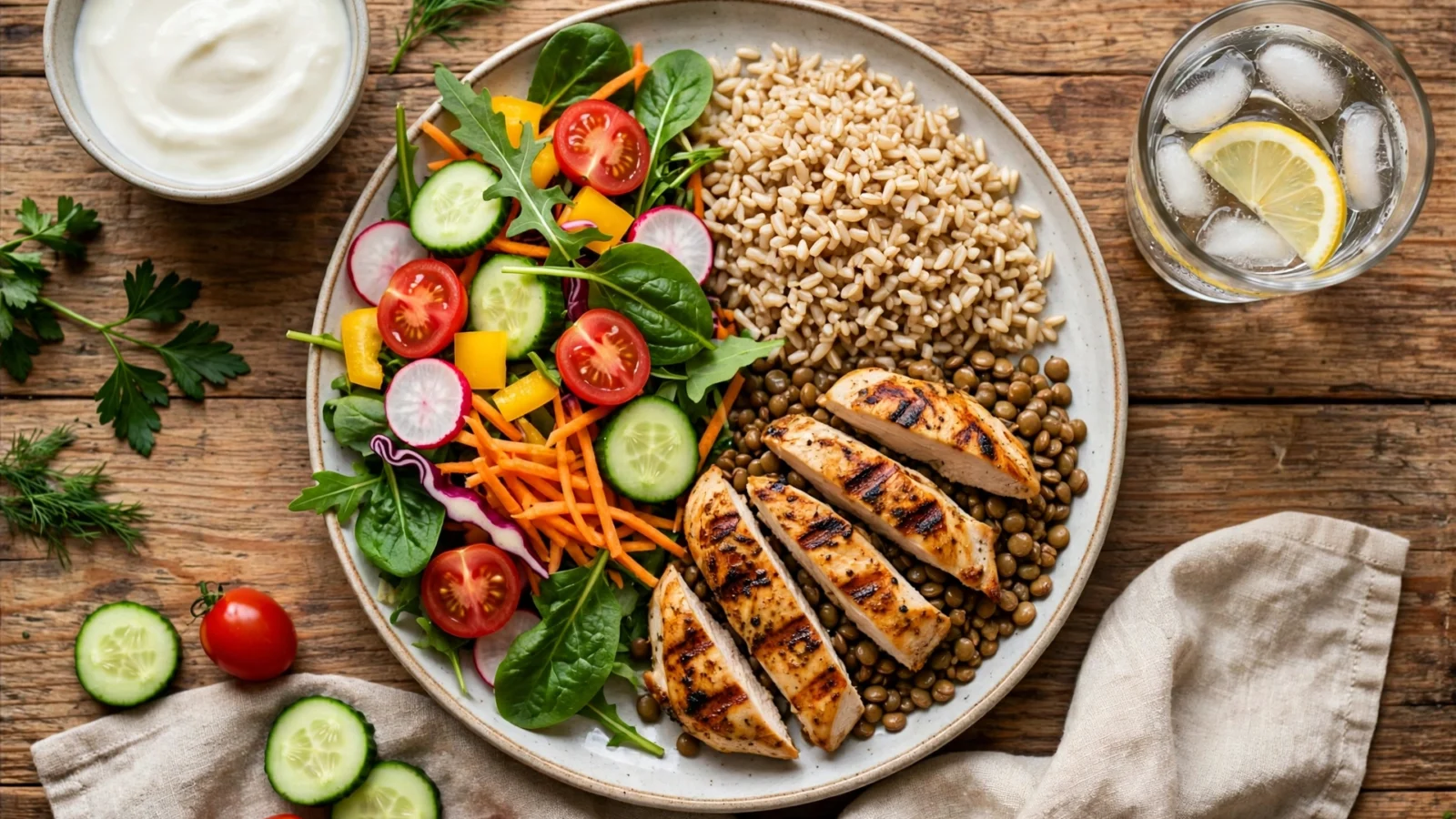
A balanced diet is simply a way of eating that gives your body everything it needs — enough energy, enough protein, enough fibre, vitamins and minerals — without overdoing the things that cause harm, like added sugar, salt, and processed meat. It is not a named diet, not a meal plan you buy, and not a list of forbidden foods. It is a pattern: mostly plants, some whole grains, some protein, a little healthy fat, and water to drink. If you can build most of your meals that way, you are already eating a balanced diet.
The easiest way to picture it is the plate method. Nutrition experts at the Harvard T.H. Chan School of Public Health created the Healthy Eating Plate in 2011, and it is still the clearest picture of a balanced meal there is: fill about half your plate with vegetables and fruits, a quarter with whole grains, and a quarter with healthy protein, with a little healthy oil and water on the side. No weighing, no calorie counting, no app. Just the shape of the plate.
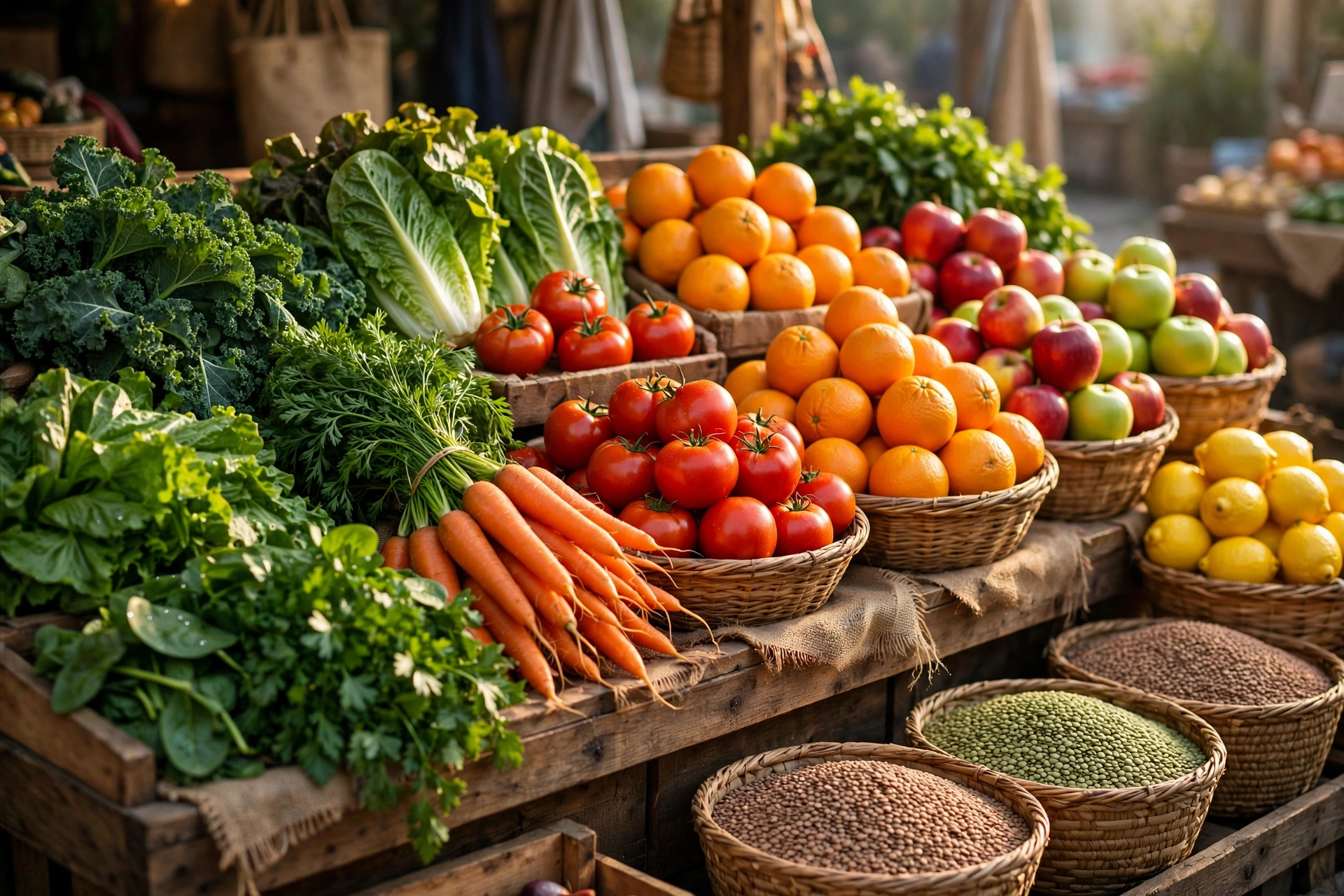
Key Takeaways
- A balanced diet means mostly plants, some whole grains, some protein, a little healthy fat, and water — a pattern, not a named diet or a meal plan.
- The simplest picture is the Harvard Healthy Eating Plate: about half vegetables and fruits, a quarter whole grains, a quarter healthy protein.
- The World Health Organization recommends at least 400 g of fruit and vegetables a day — about five portions.
- Most adults need about 0.8 g of protein per kilogram of body weight a day, and about 25–38 g of fibre a day.
- What to limit is as important as what to eat: added sugar, salt, processed meat, and sugary drinks.
- A balanced diet is not one-size-fits-all — age, activity, pregnancy, and medical conditions change what you need, so treat this guide as general information, not personal advice.
Table of Contents
- What Is a Balanced Diet?
- The Plate Method: The Simplest Picture of a Balanced Diet
- The Food Groups in a Balanced Diet
- How Much of Each Food Do You Actually Need?
- What to Limit: Sugar, Salt, and Processed Foods
- Balanced Diet Examples: A Day of Meals
- What a Balanced Pakistani Plate Looks Like
- Common Mistakes People Make With a Balanced Diet
- Who Needs a Different Balance?
- Frequently Asked Questions
What Is a Balanced Diet?
What is a balanced diet in simple words?
A balanced diet is a way of eating that covers all of your body’s needs from food: energy from carbohydrates and fats, building material from protein, and the small but essential amounts of vitamins, minerals, and fibre that keep everything working. No single food does all of that, which is why variety is the whole point. A diet of only rice is not balanced, however much rice you eat. A diet of only meat is not balanced either. Balance comes from the mix — different foods, in roughly the right proportions, most days of the week.
It is worth saying plainly what a balanced diet is not. It is not a diet for losing weight, though eating this way often helps with weight. It is not a detox, a cleanse, or a 30-day challenge. And it is not about perfection: one unbalanced meal, or even one unbalanced day, does not break anything. What matters is the pattern over weeks and months, not any single plate.
The Plate Method: The Simplest Picture of a Balanced Diet
If you remember one thing from this guide, make it the plate. The Harvard Healthy Eating Plate, created by nutrition experts at the Harvard T.H. Chan School of Public Health in 2011, divides a meal into three parts:
| Part of the plate | Share | What goes there |
|---|---|---|
| Vegetables and fruits | About half | Leafy greens, broccoli, carrots, peppers, tomatoes, beans, apples, berries, oranges — aim for colour and variety, and more vegetables than fruit |
| Whole grains | About a quarter | Brown rice, whole-wheat roti or bread, oats, barley, quinoa — whole grains, not refined ones |
| Healthy protein | About a quarter | Fish, chicken, eggs, lentils, beans, nuts — limit red meat and avoid processed meats |
Around the plate, two more things: use healthy plant oils, like olive oil, in moderation, and drink water — water, tea, or coffee — rather than sugary drinks. The US Department of Agriculture’s MyPlate gives the same broad picture (make half your plate fruits and vegetables, and make at least half your grains whole), and the UK’s NHS Eatwell Guide and Canada’s food guide agree on the same proportions. When the world’s major guides all draw the same plate, that is a good sign the advice is solid.
One detail from the Harvard plate surprises people: potatoes do not count as vegetables in this framework. Potatoes raise blood sugar quickly, much like refined grains do, so they belong with the starchy foods, not with the vegetables. French fries are doubly out — they are a starchy food cooked in oil, and they do not help your plate at all.
The Food Groups in a Balanced Diet
Here is what each group actually does for you, and where to find it:
- Vegetables and fruits. These are your main source of fibre, potassium, folate, vitamin C, and a wide range of plant compounds linked to lower risks of heart disease and some cancers — all for very few calories. The World Health Organization recommends at least 400 g of fruit and vegetables a day, which the NHS turns into its “5 A Day” message: five portions of about 80 g each. Eat a variety of colours, because different colours mean different nutrients.
- Whole grains. Whole grains — brown rice, oats, barley, whole-wheat bread and pasta — keep their fibre-rich bran and germ, which means steadier blood sugar and better digestion than refined grains like white rice and white bread. The USDA’s advice is to make at least half your grains whole; Harvard goes further and says make them all whole.
- Protein foods. Protein repairs tissue, builds enzymes, and keeps you feeling full. Good sources are fish, chicken, eggs, lentils, beans, and nuts. Red meat is fine occasionally, but Harvard’s experts recommend limiting it, and avoiding processed meats like bacon, sausage, and deli meats, because of the evidence linking them to heart disease and colorectal cancer risk.
- Dairy or alternatives. Milk, yoghurt, and cheese provide calcium and protein. Choose plain yoghurt over sweetened versions, and if you use plant-based alternatives, pick ones with added calcium and no added sugar.
- Healthy fats. Fat is not the enemy — the type matters. Healthy plant oils, nuts, seeds, and oily fish provide the fats your body needs. What to limit is saturated fat from fatty meat and full-fat dairy, and to avoid trans fats from fried fast food and some baked goods.
- Water. Water is the drink a balanced diet assumes. It carries nutrients, regulates temperature, and replaces what you lose through sweat and urine. Sugary drinks, including fruit juice, do not belong in the same category — they add sugar without adding nutrition.
How Much of Each Food Do You Actually Need?
Exact amounts depend on your age, sex, body size, and how active you are, so the numbers below are starting points for a typical adult, not a prescription:
| What | Rough daily target (typical adult) | Source |
|---|---|---|
| Fruit and vegetables | At least 400 g — about 5 portions of 80 g | World Health Organization; NHS “5 A Day” |
| Protein | About 0.8 g per kilogram of body weight (about 56 g for a 70 kg adult) | Recommended dietary allowance, US National Academies |
| Fibre | About 25 g a day for women, 38 g for men | Adequate intake, US Institute of Medicine |
| Salt | Less than 5 g a day (about one teaspoon) | World Health Organization |
| Free sugars | Less than 10% of daily energy, and ideally less than 5% | World Health Organization |
Two of those numbers are worth a closer look. The protein figure — 0.8 g per kilogram — is a minimum for most adults, not a target to chase with supplements. A 70 kg adult needs about 56 g a day, which is roughly a palm-sized piece of chicken, an egg, and a bowl of lentils. Most people who eat a varied diet already reach it. And the fibre figure matters because fibre is what most modern diets lack: whole grains, beans, lentils, vegetables, and fruit are the way to reach it, not a fibre supplement.
How much water you need is covered in our guide to how much water to drink a day — the short answer is that it depends on your weight, your activity, and the weather, and thirst is a reasonable guide for most healthy adults.
What to Limit: Sugar, Salt, and Processed Foods
A balanced diet is defined as much by what you limit as by what you eat. Four things do most of the damage in a modern diet:
- Sugary drinks. Soft drinks, sweetened juices, and energy drinks add a large amount of sugar with no nutrition at all. Water, unsweetened tea, and coffee are the replacements.
- Added sugar. The WHO recommends keeping free sugars below 10% of your daily energy, and ideally below 5%. That includes sugar in tea, biscuits, sweets, and breakfast cereals, not just the sugar you add yourself.
- Salt. The WHO recommends less than 5 g of salt a day — about one level teaspoon, including the salt already in bread, sauces, and processed food. Most of the salt people eat comes from processed food, not the salt shaker.
- Processed meat and heavily processed food. Bacon, sausage, deli meats, instant noodles, and many ready meals are high in salt, saturated fat, and additives, and low in the nutrients a balanced diet needs. They are fine occasionally; the problem is when they become the daily default.
None of this means you can never have a sweet or a salty snack. It means those foods should be the exception on your plate, not the base of it. If your everyday meals follow the plate method, an occasional treat does not unbalance anything.
Balanced Diet Examples: A Day of Meals
Here is what a balanced day can look like, using the plate method at each meal:
| Meal | Example | How it fits the plate |
|---|---|---|
| Breakfast | Oats cooked in milk, with a sliced banana and a handful of nuts | Whole grains + fruit + protein from milk and nuts |
| Lunch | Grilled chicken, brown rice, and a large mixed salad with olive oil | Half vegetables, a quarter grains, a quarter protein |
| Snack | Plain yoghurt with berries, or an apple with a small handful of almonds | Protein + fruit, no added sugar |
| Dinner | Lentil soup, whole-wheat bread, and steamed vegetables | Protein from lentils, whole grains, vegetables |
Notice what is missing from that day: no soft drink, no fried snack, no white bread at every meal. And notice what is not there either: no weighing, no counting, no special products. The plate method works with ordinary food from an ordinary market.
What a Balanced Pakistani Plate Looks Like
The plate method works just as well with Pakistani food — it does not need imported ingredients. A balanced Pakistani plate might be: one whole-wheat roti (chapati) instead of two white ones, a bowl of daal or a piece of chicken, a generous serving of sabzi, and a salad of onion, tomato, and cucumber on the side, with water to drink. Daal, chana, and lobia are excellent protein sources, and they are cheap. Seasonal fruit — guava, oranges, mangoes in season — covers the fruit half of the plate.
Two common habits are worth adjusting, not abandoning. First, ghee and cooking oil: use less, and use it in moderation — a spoonful, not a ladleful. Second, white rice and white roti at every meal: swapping one of them for brown rice or whole-wheat roti adds the fibre that refined grains lose. Neither change needs a new recipe — it is the same food, in a better proportion.
Common Mistakes People Make With a Balanced Diet
- Counting calories but ignoring quality. A 500-calorie soft drink and a 500-calorie meal of lentils and vegetables are not the same food. Calories tell you how much energy you ate, not whether the food gave you anything useful.
- Cutting out a whole food group. Skipping all carbohydrates or all fats usually backfires: you lose the fibre and nutrients those foods carry, and the diet becomes hard to keep up. Balance means keeping all the groups, in proportion.
- Trusting the front of the packet. “Low fat” often means high sugar, and “whole grain” on a packet can mean a small amount of whole grain mixed with refined flour. The ingredients list, not the claim on the front, tells you what is inside.
- Drinking your sugar. A glass of fruit juice can contain as much sugar as a soft drink, with the fibre removed. Eating the fruit is better than drinking it.
- Treating supplements as a substitute. A multivitamin cannot replace the fibre, the plant compounds, and the variety of real food. Supplements have their place for specific deficiencies, on a doctor’s advice — not as a shortcut around eating well.
Who Needs a Different Balance?
The plate method is a starting point for healthy adults. Some people need a different balance, and should get personal advice rather than following a general guide:
- Pregnant and breastfeeding women need more energy, protein, iron, and folate than the standard plate provides.
- Children and teenagers need more energy and protein relative to their size, because they are growing.
- Older adults often need more protein per kilogram to maintain muscle, even as their total energy needs fall.
- People with diabetes, kidney disease, heart disease, or food allergies may need to change the proportions — for example, less salt, less sugar, or a different amount of protein. That is a conversation for their doctor or a dietitian, not a general article.
If any of those apply to you, use this guide as background and ask your doctor or a registered dietitian for advice fitted to you.
Frequently Asked Questions
What is a balanced diet in simple words?
A balanced diet is a way of eating that gives your body everything it needs — energy, protein, fibre, vitamins, and minerals — in roughly the right proportions, mostly from plants, whole grains, and healthy protein, with sugar, salt, and processed foods limited. The simplest picture is the Harvard Healthy Eating Plate: half vegetables and fruits, a quarter whole grains, a quarter protein.
What are the 5 food groups in a balanced diet?
The five main groups are vegetables and fruits, whole grains, protein foods (meat, fish, eggs, beans, lentils, nuts), dairy or calcium-rich alternatives, and healthy fats and oils — with water as the drink. A balanced diet includes something from each group most days, in the proportions the plate method shows.
How much protein do I need a day?
Most adults need about 0.8 grams of protein per kilogram of body weight a day — about 56 grams for a 70 kg adult. Active people, older adults, and pregnant women need more, and the exact amount is best worked out with a doctor or dietitian. Most people who eat a varied diet already reach the basic amount without supplements.
Is rice part of a balanced diet?
Yes — rice is a grain, and grains belong on a quarter of the plate. Brown rice is better than white rice because it keeps its fibre, but white rice is not forbidden; the balance comes from what else is on the plate. Pairing rice with lentils, vegetables, and a salad makes a balanced meal.
Can I eat a balanced diet on a budget?
Yes. The cheapest balanced foods are also among the best: lentils, beans, chickpeas, seasonal vegetables, eggs, and whole-wheat flour. Meat is the most expensive part of the plate, and the plate method only gives it a quarter — beans and lentils can fill that quarter for much less money.
How many vegetables should I eat a day?
The World Health Organization recommends at least 400 grams of fruit and vegetables a day — about five portions of 80 grams each. Aim for more vegetables than fruit within that total, and eat a variety of colours.
Is a balanced diet the same as a weight-loss diet?
No. A balanced diet is about getting the right nutrients in the right proportions; a weight-loss diet is about eating fewer calories than you burn. Eating a balanced diet often helps with weight, because vegetables and whole grains are filling for relatively few calories — but weight loss also depends on total calories, activity, and other factors.
What is a balanced diet for a diabetic?
The same plate method applies, with extra care in two places: choose whole grains over refined grains, because they raise blood sugar more slowly — our guide to the glycemic index explains why — and keep sugary drinks and sweets out of the everyday pattern. Portions of starchy food should stay consistent from meal to meal. A person with diabetes should work out their own plan with their doctor or a dietitian, because medication and blood sugar targets change the details.
What is a balanced diet for a 1-year-old?
At one year old, a child eats soft family foods from all the food groups — vegetables, fruit, grains, lentils, eggs, yoghurt — in small portions, alongside breast milk or formula. The foods are the same as the family eats, just softer, cut small, and without added salt or sugar. A paediatrician can advise on amounts and on when to move from milk to family meals.
Do I need supplements on a balanced diet?
Most healthy adults eating a varied, balanced diet do not need a general multivitamin. Supplements are for specific situations — a diagnosed deficiency, pregnancy, or a medical condition — and should be taken on a doctor’s advice, not as a replacement for real food.
Sources: Harvard T.H. Chan School of Public Health, Healthy Eating Plate; World Health Organization, healthy diet fact sheet; US Department of Agriculture, MyPlate; NHS Eatwell Guide. This article is general information only and is not medical advice. If you have a medical condition or specific dietary needs, talk to your doctor or a registered dietitian.
Related reading on RIAHS: our guide to the glycemic index explains why whole grains and lentils keep your blood sugar steadier than refined grains; our guide to how much water to drink a day covers the drink that goes with every balanced meal; and our guide to cardiovascular disease explains how diet fits into heart health. You can also check your numbers with our free tools: the BMI calculator and the full medical tools hub.